38 calorie used on food labels is equal to
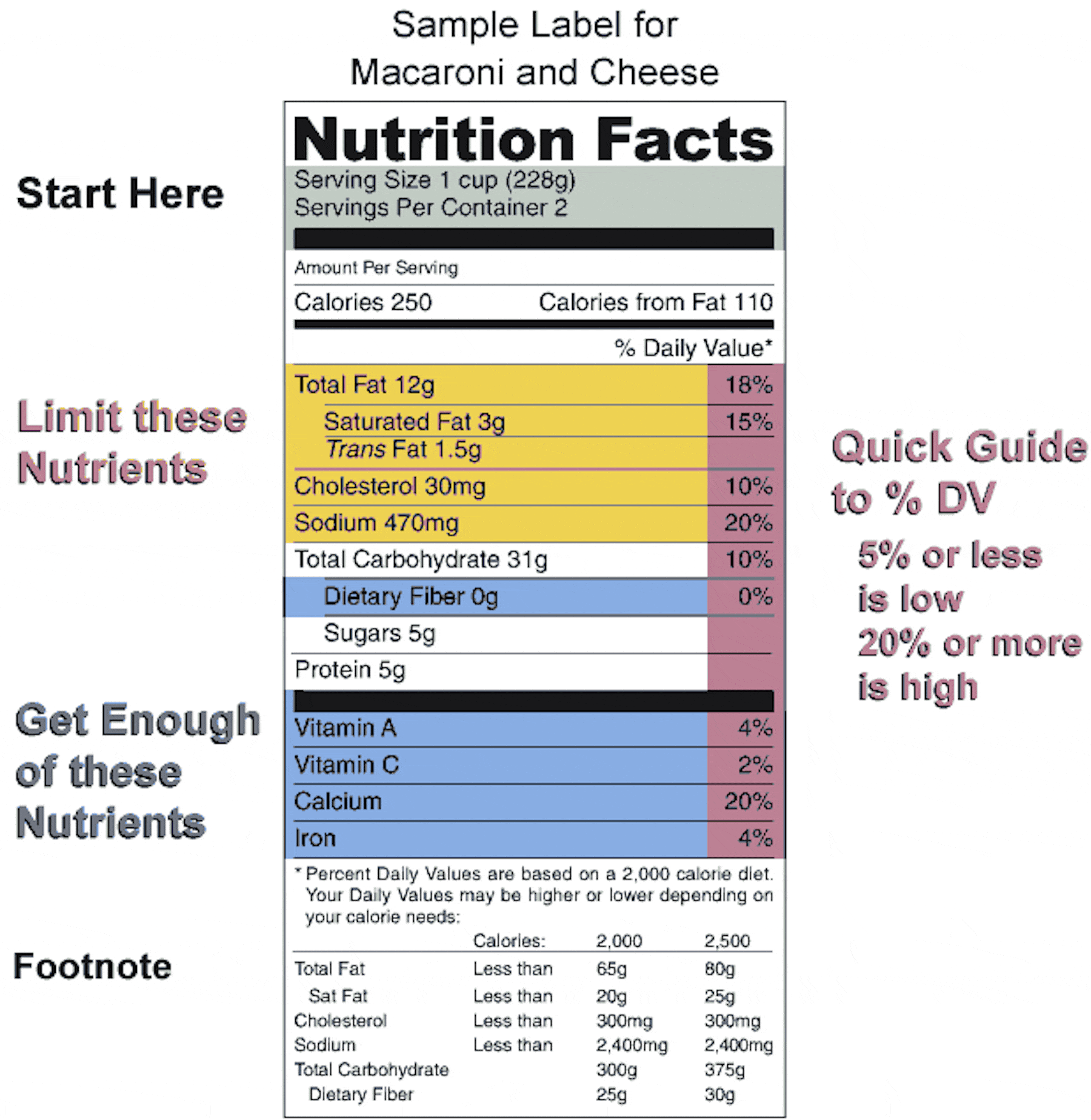
The calorie used on food labels is equal to - Brainly.com The calorie used on food labels is equal to - 2868021 cobe16 cobe16 02/12/2017 Biology High School answered The calorie used on food labels is equal to 1 See answer Advertisement Advertisement cobe16 is waiting for your help. Add your answer and earn points. ... Reading Food Labels (for Parents) - Nemours KidsHealth A food with 20% or more of a nutrient is high in that nutrient. The information on food labels is based on an average diet of 2,000 calories per day. But the actual number of calories and nutrients that kids need will vary according to their age, weight, gender, and level of physical activity. (For more guidance, check out the USDA's MyPlate .)
How Many Calories Does One KCAL Equal? | livestrong According to HyperPhysics of Georgia State University, the dietary Calorie (with a capital C) is equivalent to a kilocalorie, which is equivalent to 1,000 calories. You can think of it in simpler terms: The Calories labeled on food nutrition facts are, in fact, kilocalories, explains the USDA National Agricultural Library. One kilocalorie is equivalent to 1 Calorie.
/arc-anglerfish-arc2-prod-dmn.s3.amazonaws.com/public/CNNQ32KCF37G4KEE2S3HI7D2LI.jpg)
Calorie used on food labels is equal to
How to Compare Two Food Labels | Live Healthy - Chron.com 8. Check out the column on the right side of the label, which indicates the daily value percentages for each nutrient. This column is helpful for a quick food comparison. As a rule of thumb, for those nutrients you want to limit, look for a daily value of 5 percent or less. For desired nutrients, select those foods with 20 percent or higher ... How calories are calculated: Science behind the | Live Science A calorie is a unit of energy, not a measure of weight or nutrient density. The calories you see on nutrition labels, however, are actually kilocalories, or kcals, according to the National Health... Calorie - Wikipedia The precise equivalence between calories and joules has varied over the years, but in thermochemistry and nutrition it is now generally assumed that one (small) calorie ( thermochemical calorie) is equal to exactly 4.184 J, and therefore one kilocalorie (one large calorie) is 4184 J, or 4.184 kJ. [10] [11] Contents 1 History 2 Definitions 3 Usage
Calorie used on food labels is equal to. bio 9_27_21.pdf - Calories in Calorie- common unit of energy used in ... Calories in Calorie- common unit of energy used in food nutrition labels - Calorie (with a big C)is equal to 1,000 calories\ - Calorie (with a little c) is the amount of energy required to raise the temperature of 1 gram of water by 1°C Di±erent biomolecules have di±erent amounts of calories/gram. Why most food labels are wrong about calories A calorie is a measure of usable energy. Food labels say how many calories a food contains. But what they don't say is that how many calories you actually get out of your food depends on how highly... Should 'Exercise Equivalents' Be Part of Food Labeling? - Healthline The Royal Society for Public Health is recommending the United Kingdom introduce an "activity equivalent" as part of calorie labeling on food. Shirley Cramer, the chief executive of the agency ... What is the unit of energy used on food labels? - Wise-Answer Understanding food labels, nutrition, and health. Calorie, a unit of energy or heat variously defined. The calorie was originally defined as the amount of heat required at a pressure of 1 standard atmosphere to raise the temperature of 1 gram of water 1° Celsius.
Check the label | Food Standards Agency The traffic light label is colour coded and shows that green is low in a particular nutrient, amber means medium and red is high in a nutrient. Red. means the product is high in a nutrient and you should try to cut down, eat less often or eat smaller amounts. Amber. means medium. If a food contains mostly amber, you can eat it most of the time. How to Understand and Use the Nutrition Facts Label | FDA - U.S. Food ... That is two times the calories and nutrients shown in the sample label, so you would need to double the nutrient and calorie amounts, as well as the %DVs, to see what you are getting in two... Food Labels: Calories VS Energy - Marci R.D. In case you haven't noticed, their food labels don't contain the word "calories." Instead, they use the word "energy." Every time I see that it brings a smile to face. In my opinion, the word calorie seems to possess a laundry list of negative associations. Count your calories Cut your calories Burn your calories Choose your calories wisely How Many Grams Of Fat Are In A Calorie? - Cooking Tom A calorie is actually a unit of heat, and therefore, to lose weight, we need to eat fewer of them than we consume. However, a calorie is not always equal to a gram of fat or a gram of sugar. For example, a 100 gram apple contains about 100 calories, but only about 4 grams of fat. How to Calculate the Fat in a Calorie.
Food labels - NHS These labels provide information on the number of grams of fat, saturated fat, sugars and salt, and the amount of energy (in kJ and kcal) in a serving or portion of the food. But be aware that the manufacturer's idea of a portion may be different from yours. Some front-of-pack nutrition labels also provide information about reference intakes. The Calorie used on food labels is equal to how many calories? The Calorie used on food labels is equal to how many calories? Chemistry Measurement Unit Conversions 1 Answer Andy Wolff Nov 18, 2016 1000 Explanation: The food Calorie (capital "C") is actually a kilocalorie ( 1 ×10³ calories)! Why would someone do this? Well, probably because it takes about 2 megacalories ( 2 ×10⁶) to run a person for a day. Thermochemistry and Nutrition - GitHub Pages The nutritional Calorie A unit used to indicate the caloric content of food. It is equal to 1 kilocalorie (1 kcal). (with a capital C) that you see on food labels is equal to 1 kcal (kilocalorie). The caloric content of food is determined from its enthalpy of combustion (ΔH comb) per gram, as measured in a bomb calorimeter, using the general ... How is the caloric value of food determined? | Office for Science and ... (There is some rounding off because simple sugars provide somewhat less and polysaccharides somewhat more than 4 Kcal/g). Thus the label on a 45 gram KitKat that contains 3 g of protein, 29 g of carbohydrate (22 grams of which are simple sugars) and 12 g of fat would read 230 Calories. Some interesting data emerges from such calculations.
FDA proposes major calorie, portion-size changes on food labels
Biology Flashcards | Quizlet The Calorie used on food labels is equal to 1000 calories A Calorie is also referred to as a Kilocalorie Cells use the energy stored in chemical bonds of foods to produce compounds that directly power the cell's activities, such as ATP The equation that summarizes cellular respiration, using chemical formulas, is 6O2+C6H12O6-->6CO2+6H2O+Energy

Kilocalories Vs. Calories: Understanding The Difference
Calorie Counts Aren't Accurate - Business Insider At its most basic, a calorie is a measure of energy. One Calorie (equal to one kilocalorie, or 1,000 calories) is the amount of energy that is required to heat one kilogram of water 1 degree...

1 kilocalorie = 1 calorie in nutrition - Deepstash
Why Do Food Labels Use Calories Instead of Joules or Kilojoules? On U.S. food labels, the term "calorie" actually means kilocalorie, though a calorie is technically the smaller measurement. Kilojoules Most countries outside the United States use kilojoules on food labels. A kilocalorie equals 4.184 kilojoules. The United States Department of Agriculture's National Nutrient Database lists values for both.

New food labels would highlight calories and sugar
Why are kilojoules used on food labels? Score: 4.5/5 (64 votes) . A kilojoule (or Calorie) is a unit of energy. In Australia, we use kilojoules (kJ) to measure how much energy people get from consuming a food or drink.The kilojoule content of foods depends on the amount of carbohydrates, fats and proteins present in the food, and the portion size.

5 Tips for Beginning Calorie Counting | Fresh Healthy Eats
The calorie used on food labels is equal to how many calories? The calorie used on food labels is equal to 1000 calories . Cells use this energy in various metabolism of our body. Calories are essential for the human body to do day to day activities. Cells use the energy present between the chemical bonds of carbohydrates or starch to various metabolic activities. So it can be said that the Calorie used on ...

Information on calories you may not know | Tara Burner – Real Estate Broker, Cars, Promoter ...
Calories on the New Nutrition Facts Label | FDA - U.S. Food and Drug ... One package of food may contain more than one serving, so, if you eat two servings you would be getting two times the calories shown on the label. For example, if you ate one serving of the food...

Weight Loss: Healthy Food Labels' Calorie Counts are Flawed | Shape
Calories on the Label Equal Calories Stored - Fact or Myth? Saying "a calorie is a calorie" sort of implies that 1 calorie on the label translates to 1 calorie of usable energy, but that isn't completely true. Different types of macronutrients can have a wide range of physiological effects regarding hunger, hormones, energy gained, energy spent, psychology , physical appearance, and more.

Calories and Food Labels
Kcal vs. Calories: Differences and How to Convert - Healthline One calorie (kcal) equals 4.18 kJ or 4,184 joules (J) ( 1 ). To convert from calories to kJ, multiple calories by 4.18. Conversely, to convert from kJ to calories, divide kJ by 4.18. For example, a...
Why most food labels are wrong about calories
What are calories? How are they measured in food? | HowStuffWorks One calorie is equal to 4.184 joules, a common unit of energy used in the physical sciences. Most of us think of calories in relation to things we eat and drink, as in "This can of soda has 200 calories." It turns out that the calories listed on a food package are actually kilocalories (1000 calories = 1 kilocalorie).
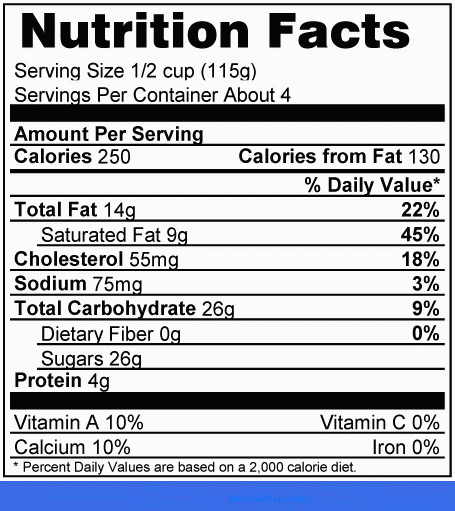
What Do Total Carbohydrate And Added Sugar On The Nutrition Label Mean? - Eat Out, Eat Well
What is the difference between the dietary calorie and the physical ... The food Calorie is often spelled with an upper case 'C' to distinguish it from the smaller calorie. By the way, this metric measure of energy has an English counterpart which you've probably seen used to describe air conditioners and furnaces. ... A food Calorie is the equivalent of about 4 BTU's. Answered by: Paul Walorski, B.A. Physics, Part ...
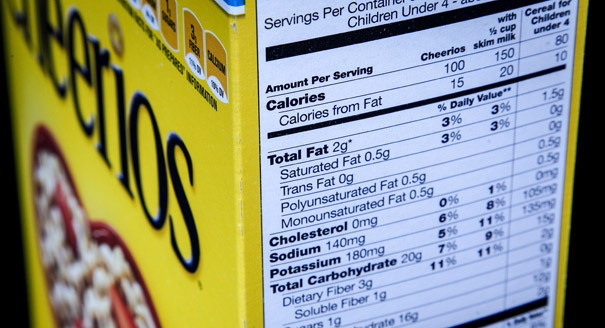
Fresh15 on emaze
Calorie - Wikipedia The precise equivalence between calories and joules has varied over the years, but in thermochemistry and nutrition it is now generally assumed that one (small) calorie ( thermochemical calorie) is equal to exactly 4.184 J, and therefore one kilocalorie (one large calorie) is 4184 J, or 4.184 kJ. [10] [11] Contents 1 History 2 Definitions 3 Usage
34 How To Calculate Calories From Fat On A Food Label - Labels Information List
How calories are calculated: Science behind the | Live Science A calorie is a unit of energy, not a measure of weight or nutrient density. The calories you see on nutrition labels, however, are actually kilocalories, or kcals, according to the National Health...
Calorie Labels Can Be 20% Inaccurate. How to Keep up Your Diet Anyway.
How to Compare Two Food Labels | Live Healthy - Chron.com 8. Check out the column on the right side of the label, which indicates the daily value percentages for each nutrient. This column is helpful for a quick food comparison. As a rule of thumb, for those nutrients you want to limit, look for a daily value of 5 percent or less. For desired nutrients, select those foods with 20 percent or higher ...

Study: Low Calorie, Sugar Free, Zero Fat Foods Are Actually Unhealthy

How to Count Calories to lose weight

Proof is in the eating: all kilojoules not equal

Eggless Custard Cookies - Aaichi Savali

The sweet alternative - Healthy Balance
Post a Comment for "38 calorie used on food labels is equal to"